A Smart RCCB and MCB Future: Smart Circuit Protection
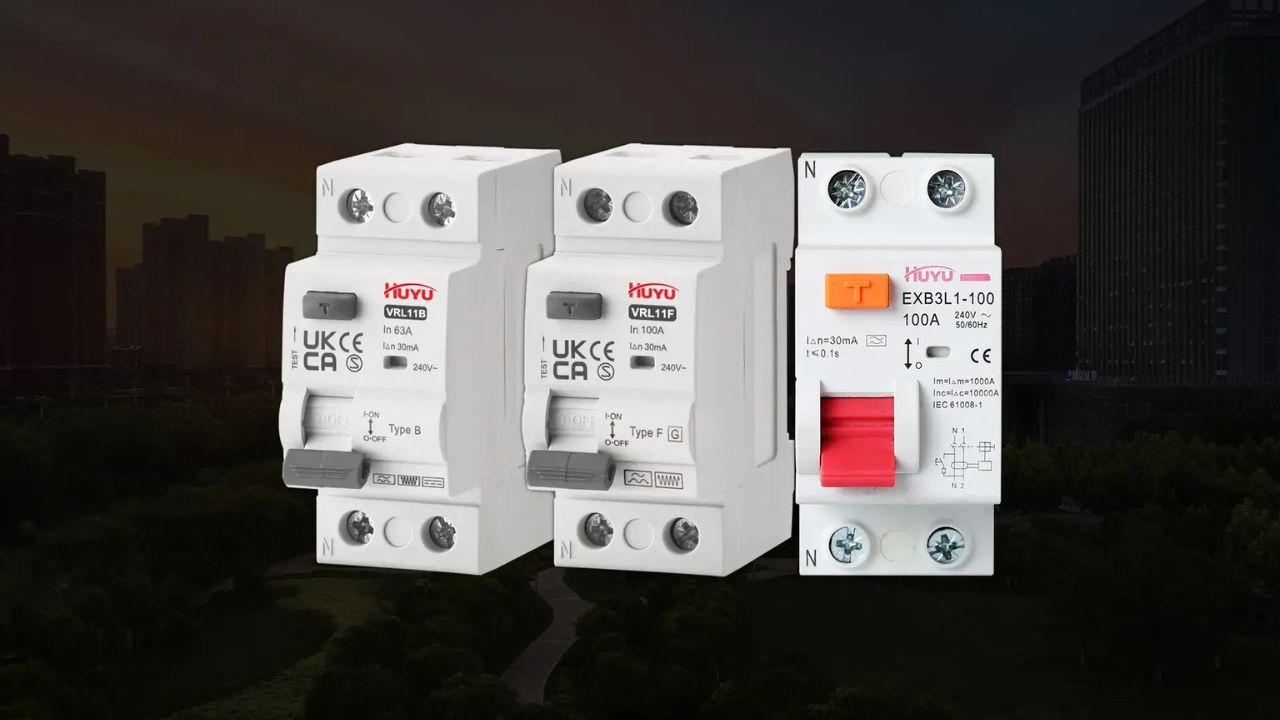
Circuit protection is a traditional building block of electrical safety that guarantees the safety of people and equipment against hazards such as electric shocks, short circuits, and overloads. Historically, this has been done by equipment such as Residual Current Circuit Breakers (RCCBs) and Miniature Circuit Breakers (MCBs), and has been exceptionally reliable. The future of circuit protection is, however, shifting towards smarter, more connected solutions as electrical systems grow in complexity. Smart RCCBs and MCBs are the new state of electrical safety, as they integrate conventional protection with the modern capabilities of monitoring, networking, and automation.
Circuit Protection of the Traditional Circuit
The traditional RCCBs and MCBs have provided good services to the industry; they are not without shortcomings. RCCBs are installed to guard people against electric shocks with leakage currents, but not against overcurrent or short circuits. On the same note, MCBs offer overcurrent protection but fail to detect earth leakage currents. In most cases, full protection involves the use of RCCBs and MCBs, which may result in complicated constructions and a lack of understanding of how the system works.
Moreover, classical circuit breakers are fully mechanical, and they can only occur when some anomaly takes place when they are running on preset thresholds. This method is efficient but does not have the real-time diagnostic features and is not able to show the usage patterns, the health of the system, as well as the first signs of possible faults. In contemporary structures, industries, and renewable energy systems, such invisibility may cause downtime, poor utilization of energy, and slow repair.
The Emergence of Smart RCCBs and MCBs
The solution to these problems comes in the form of smart circuit protection devices, which incorporate electronic sensors, communication modules, and software intelligence in the conventional breakers. Not only are overcurrent and earth leakage detected, but also fine variations in load patterns, harmonic distortions, and intermittent faults that might otherwise go unnoticed by traditional devices are also detected by Smart RCCBs and MCBs.
Such intelligent devices can connect to building management systems, energy management systems, or mobile apps so that faculty managers and homeowners can monitor electrical systems remotely. An example is a smart RCCB, when a leakage current is detected, a user is immediately warned of this, even when the leakage is below the tripping threshold. On the same note, smart MCBs are able to report commonly tripped circuits, so that overloaded circuits or defective appliances can be identified before they cause immense harm.
Increased Safety and Operating Efficiency
Embarking on smart technology in circuit breakers not only increases the level of safety but also the level of operational efficiency. Smart RCCBs and MCBs can anticipate possible failures by constantly measuring electrical parameters and can suggest preventive maintenance. This predictive model minimizes unexpected downtimes and prolongs the life of the electrical equipment, as well as the protection devices.
Moreover, the information gathered by smart breakers can be used in energy management. Knowledge of consumption habits, peak loads, and circuit loadings allows the distribution of energy to be done more effectively, and this is of great help in industrial settings and commercial premises. The data obtained by intelligent devices enables the operator to make a wise judgment regarding the load management, energy efficiency, and sustainability programmes.
Modernizing to meet new electrical demands
The problem of circuit protection has been posed with new challenges by the growing popularity of renewable energy systems, electric vehicles, and advanced electronic devices. Conventional RCCBs and MCBs might not be able to cope with non-linear loads, DC leakage currents, and high-speed switching occurrences typical of the modern world. The smart circuit breakers are designed with special features that are able to deal with these conditions, which guarantee reliable safety even in more intricate electrical settings.
Electrical installations can future-proof themselves by using smart RCCBs and MCBs to overcome the changing risks. Manufacturers are also working on improving interoperability with new technologies, so that smart breakers can be integrated into hybrid energy systems, smart grids, and Internet of Things (IoT) enabled buildings without facing any difficulties.
Conclusion
The convergence of circuit protection, safety, and connectivity is the future of circuit protection. The use of smart RCCBs and MCBs is re-engineering the traditional breakers by offering increased protection, real-time monitoring, predictive maintenance, and energy management features. As electrical systems keep on changing, these smart devices are a proactive method of ensuring safety, where people and equipment are safe, and at the same time make the system more efficient. The use of smart circuit protection is not only a technology upgrade, but it is also a paradigm shift in the management of electrical safety at home, commercial, and industrial places, the world over.